

Across the globe, Rimini Street’s Street Smart events bring together IT and business leaders for candid conversations about what it takes to run and modernize a business in the AI era. The series offers practical strategies and peer perspectives on what really works, what doesn’t and what forward-looking leaders are doing now to prepare for the next wave of enterprise transformation.
The series turned up the heat in São Paulo with an event packed with CEOs, CIOs and senior executives from leading organizations across Brazil, including La Moda, Continental Parafusos and Eletronet, joined by outside voices including Lucas Brossi, Partner at Bain & Company, and Jorge Campos, Founder of SPED Brazil. One message carried throughout the day: Traditional ERP Software is dead. AI enablement can’t wait for the next big project. It starts today, with the systems you already own.
Innovation inside the budget: A different model for modernization
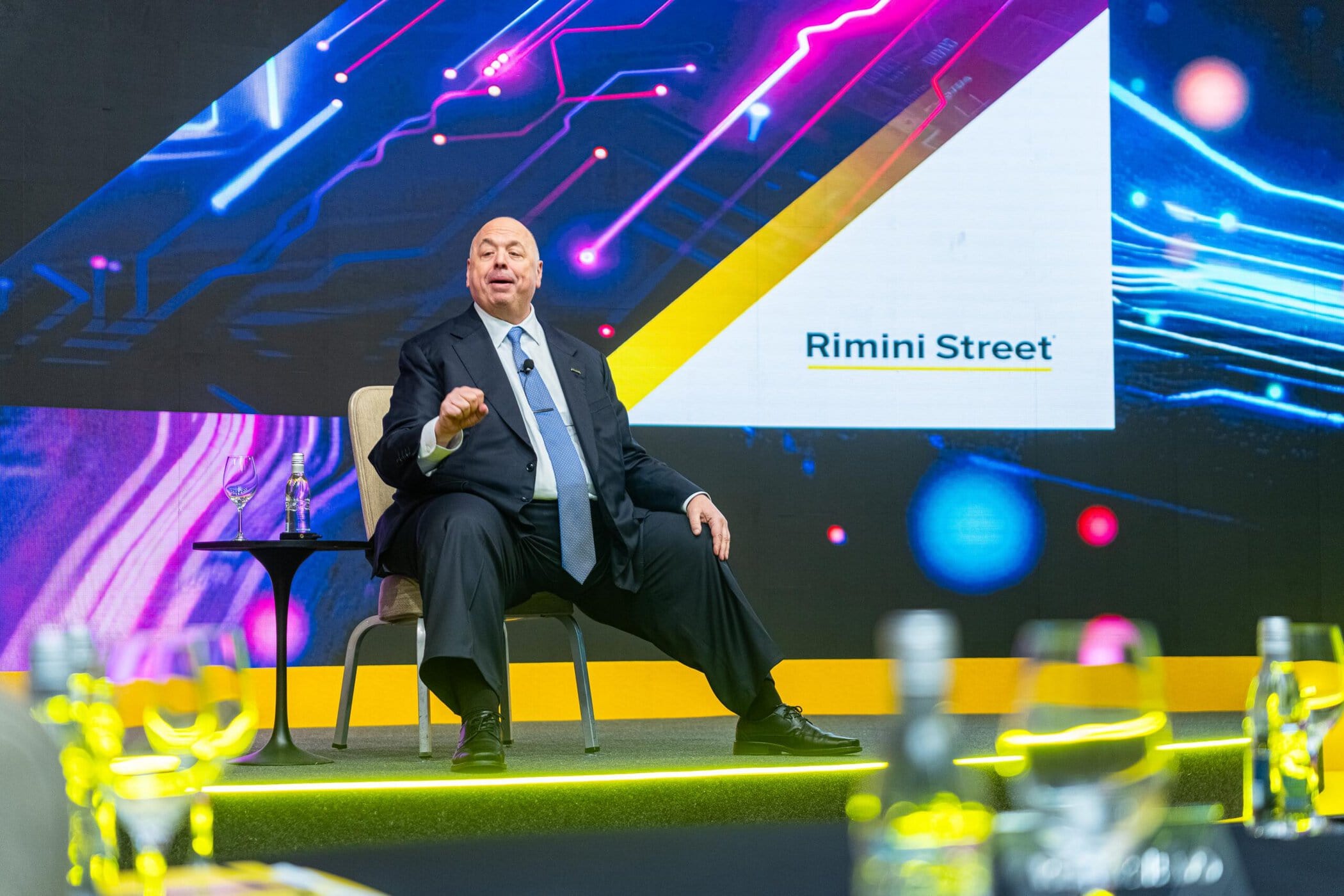
Rimini Street CEO and Chairman Seth Ravin opened the day with a macroeconomic read of the moment. The world isn’t collapsing, he asserted. AI is redefining it. Consumption-based licensing, data as the new currency and robotics moving onto the factory floor are redrawing the rules of competition. Speed of execution and speed of adaptation are now the differentiators that matter.
That reality collides with a familiar paradox in the corner office: boards want cloud, AI and digital transformation, while simultaneously keeping IT budgets flat or reducing them. With innovation typically commanding less than 10% of IT spend, something has to give.
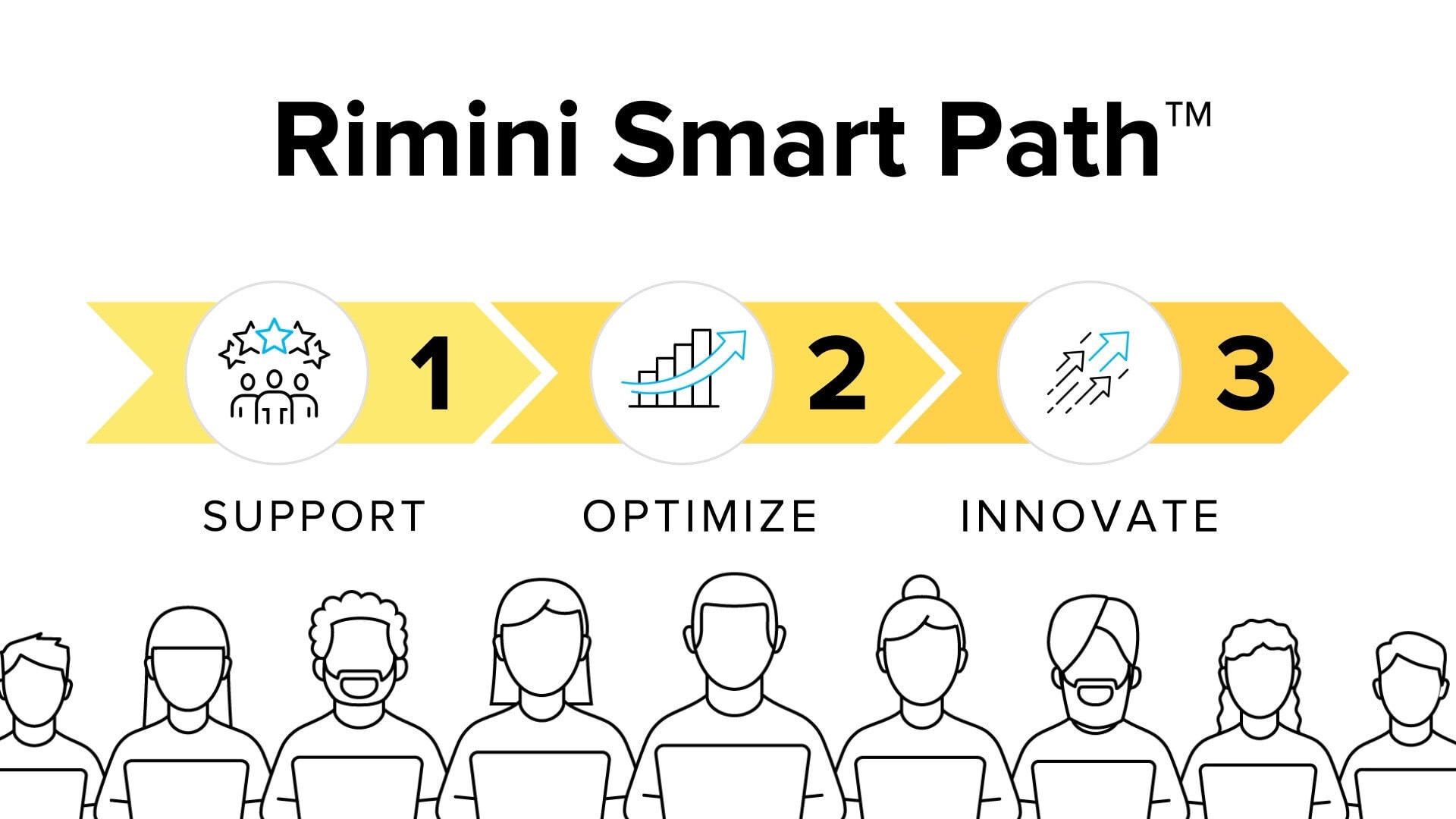
Ravin’s answer: the Rimini Smart Path™, a three-step methodology (support, optimize, innovate) designed to help IT self-fund innovation. By moving software support to Rimini Street, organizations free the budget previously consumed by upgrades and high annual support fees and redirect towards real innovation; namely, an Agentic AI ERP layer that sits over the top of existing SAP, Oracle or other systems, transforming passive systems of record into autonomous systems of action.
To make it tangible, Ravin introduced Ypê, a major Brazilian consumer goods manufacturer that was overloaded with EDI order exceptions, requiring multiple manual steps and hours of human triage. Rather than touching the underlying ERP, a Rimini Agentic UX™ solution, part of Rimini Street’s Agentic AI ERP portfolio, was deployed with ServiceNow® as the workflow backbone. Implemented in just weeks, the solution identifies the root cause of each exception and resolves it autonomously. A process that once took hours now finishes in minutes, with no migration, no system replacement and no code changes.
“We can save 30% to 50% on the total cost of running processes with this architecture. And that’s without changing a single system. Innovation happens on top of what you already have.” – Seth Ravin, CEO Rimini Street
Ravin also challenged the audience to confront less-discussed AI risks: unpredictable tokenization costs, weak governance and the temptation to swap fixed labor costs for variable AI costs without modeling the economics. He also warned that AI is accelerating vulnerability discovery beyond the capacity of traditional code remediation. With AI tools like Mythos, it’s possible to detect thousands of software vulnerabilities in minutes rather than years. Going forward, organizations will need virtual patching to control traffic and block likely attack routes. His recommendation: map processes, identify where automation creates the most value, pilot narrowly and govern AI agents like employees, with permissions, supervision and a shutoff switch.
Learn how Rimini Govern™ can help enterprises lower risk and prove AI value
Exploring the CEO-CTO alliance in the AI era
Lucas Brossi, Partner at Bain & Company, described AI as a platform shift reshaping technology, operating models, talent requirements and competitive strategy. While many companies have started AI pilots, relatively few have deployed them at scale. Moving beyond experimentation requires CEOs and CTOs to work together to identify where AI can generate the greatest business value.
Brossi shared an illustrative use case from a banking client. When the organization deployed an AI agent for collections, it didn’t just cost a third as much as human agents; it also outperformed human agents in actual recovery rates. The lesson he drew: the AI conversation is not only about cost reduction. It’s also about effectiveness and quality.
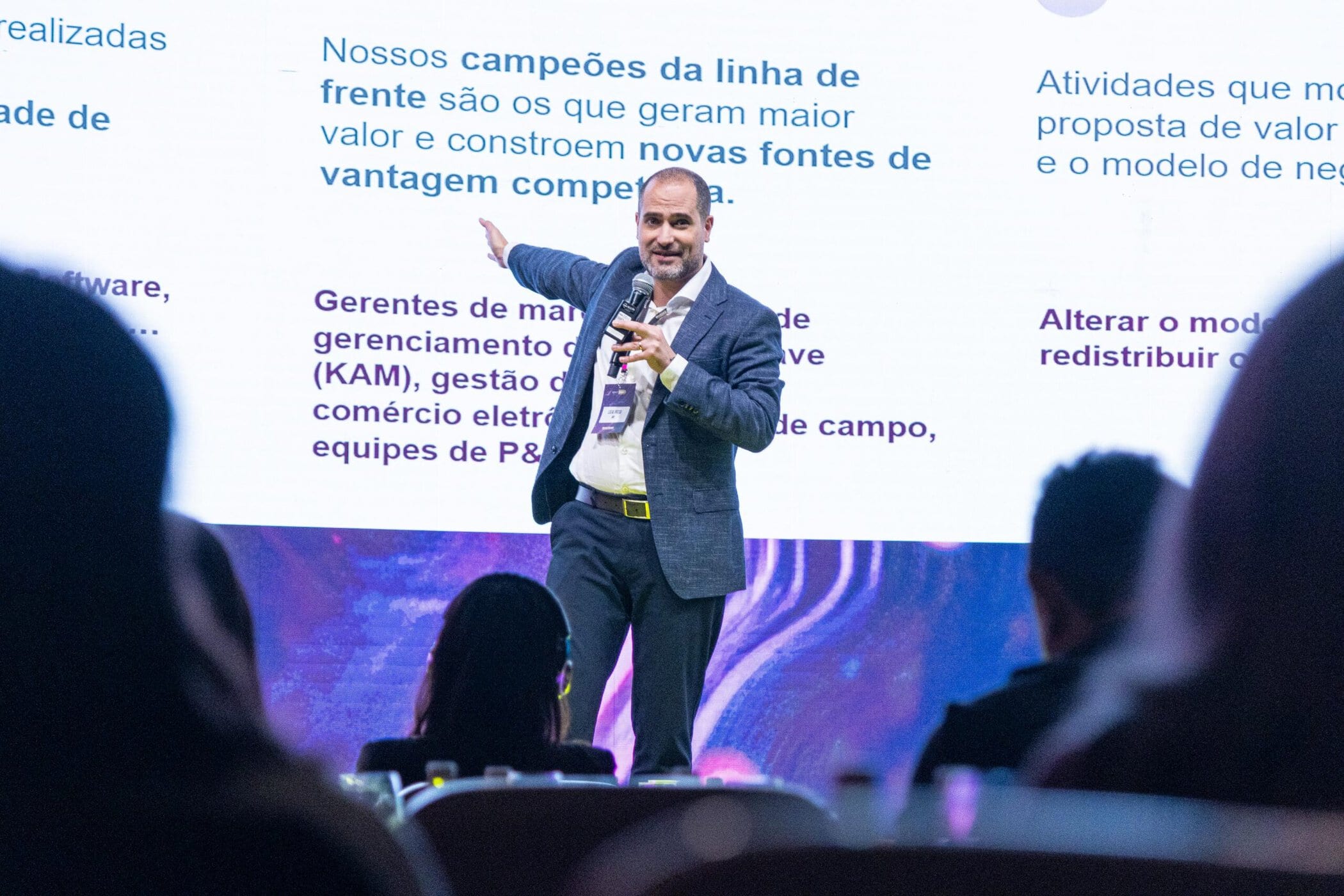
He then walked through another example with a mid-sized Brazilian company of 150 finance professionals. Bain used AI agents to interview every team member, map workflows automatically and surface optimization opportunities. The projected impact was a 30% cost reduction and a hidden discovery: the accounts payable process was so slow that the company was paying suppliers days early just to be safe. Fixing that one bottleneck released enough working capital to cover the entire project in year one!
Brossi closed with four archetypes for what future organizations will look like:
- Humans only
- Humans assisted by AI
- AI assisted by humans
- Fully autonomous AI
Transactional run-the-business processes, like payroll, accounting, procurement, he predicted, will trend toward high automation. Change-the-business work, like creativity, strategy and judgment, however, will remain human but be amplified by AI.
Pragmatism on the front line: Executives share AI transformation experiences
Client leaders brought the discussion to life by sharing how their organizations are approaching modernization and AI in the real world.
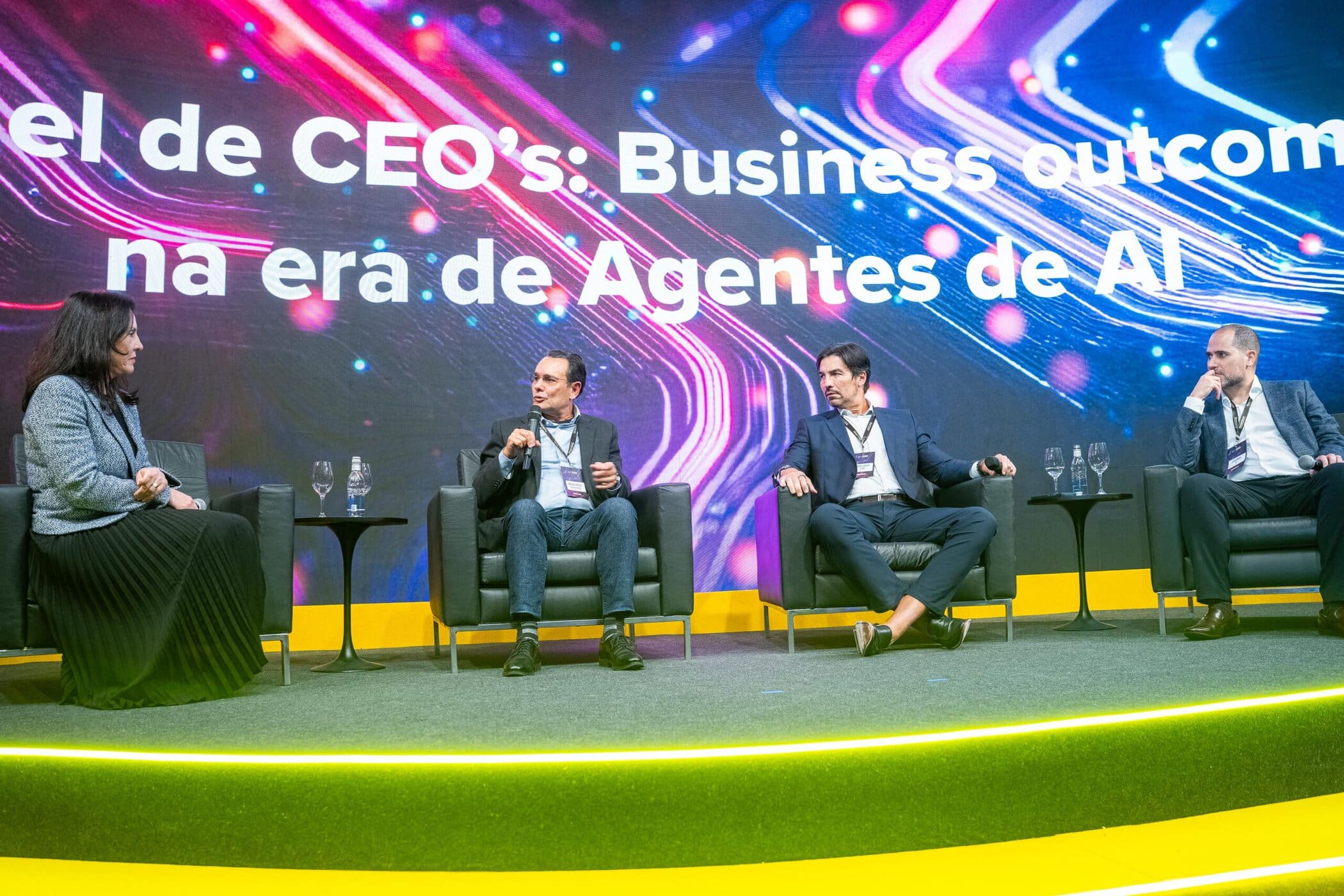
Fernando Martins, CEO of Continental Parafusos, a third-generation family business and Tier 1 supplier to the automotive and appliance industries, described a nearly two-decade journey with SAP and eight years with Rimini Street. His operating philosophy is “less is more.” The company bought perpetual SAP licenses and keeps the core on premises. They intend to continue this strategy while adopting cloud where it makes sense. Its next chapter with Rimini Street: implementing maintenance order workflows on ServiceNow and a governance and analytics layer with AI sitting over the SAP core, fed by integrated manufacturing data.
Rogerio Garchet, CEO of Eletronet, a fiber-optic transmission company operating over high-voltage towers across 23 Brazilian states, shared his experience when he joined the company a few years ago. The company was running SAP, but its sales process after order capture was entirely manual. The MM module for inventory control had never been turned on in more than a decade of use! It reinforced a point made by Bain’s Brossi from the consulting side: most organizations don’t fully use what they already pay for, and most haven’t documented their own processes well enough to layer AI on top responsibly.
The approach of fixing the process first, then automating, then adding an AI sequence isn’t optional according to Garchet. Applying AI to a broken process only results in a faster broken process. Eletronet’s first AI steps are deliberately narrow: agent-based recruiting software and predictive failure monitoring on the fiber network. From that success, they intend to expand into more use cases.
The panelists agreed that AI is not a shortcut. Effective adoption requires a detailed understanding of the processes, systems and data operating beneath it.
The headless ERP and a self-funding economic model
Drawing on data from the C-suite Imperatives: Accelerating Innovation in a Shifting Landscape research report, during my session, I pointed to three recurring anxieties: uncertainty about ERP’s long-term direction, vendor lock-in and the endless cycle of forced migrations driven by end-of-support deadlines rather than business value. Data points included:
- 38% of executives plan to focus on a long-term ERP strategy
- 38% of executives cite dependence on suppliers with limited flexibility
- 34% cite forced upgrades and migrations as some of the most frustrating pressures caused by software vendors
- 42% of CIOs and 39% of CEOs say that increased automation and AI adoption are fundamental business imperatives
- 40% cite a focus on AI and automation and 38% talent and skills development
- Optimization and cost reduction (40%), aiming for an optimistic, strategic and resilient future.
This thesis aligns with Ravin’s comments that the “one system runs all” model that defined ERP in the 1990s is no longer viable. Today’s data lives across dozens of specialized systems, and traditional ERP has become heavy, complex, slow to change and backlogged. The future is the headless ERP where the ERP keeps running as the reliable system of record in the background, while a modern experience layer, built with partners like ServiceNow and powered by AI agents, becomes the actual interface to the business. Instead of toggling between systems all day, a warehouse manager sees a single panel with metrics, AI recommendations and executable actions.
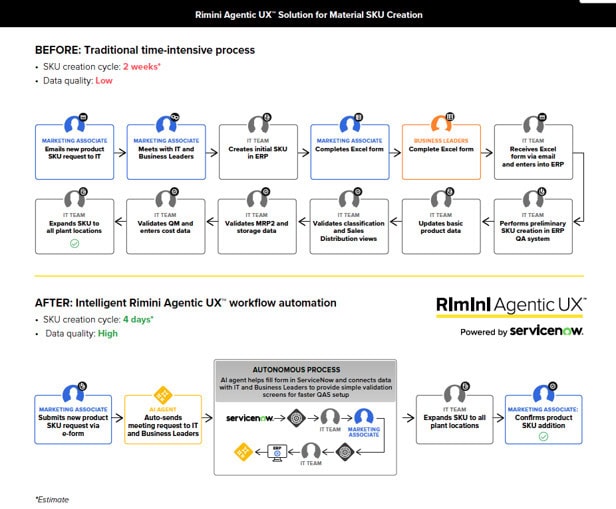
We applied this model with the global coffee manufacturer, Melitta, where SKU creation had been a two-week process strung across spreadsheets, manual uploads and validations. Using Rimini Agentic UX solutions, an AI agent was layered over the existing SAP environment to reduce processing time to 4 days, with no migration or replatforming.
And the economics behind this approach are powerful. For another Rimini Street client, choosing Rimini Support™ for SAP ECC instead of migrating to S/4HANA delivered more than R$35 million in five-year savings and unlocked nearly R$8 million for innovation projects, including ServiceNow licensing and AI agent development. Their modernization essentially paid for itself.
A real-world Rimini Agentic UX™ build: La Moda
In the final client panel, Rômulo Banhe, Head of Technology at La Moda, joined Daniel Teran, Director of Rimini Street’s Innovation Center of Excellence, to discuss a recently completed proof of concept.
The fashion sector moves on weeks, sometimes days. New sales channels appear overnight; IT has to keep up. La Moda considers SAP as its compliance-grade system of record and deliberately builds innovation around it rather than inside it.
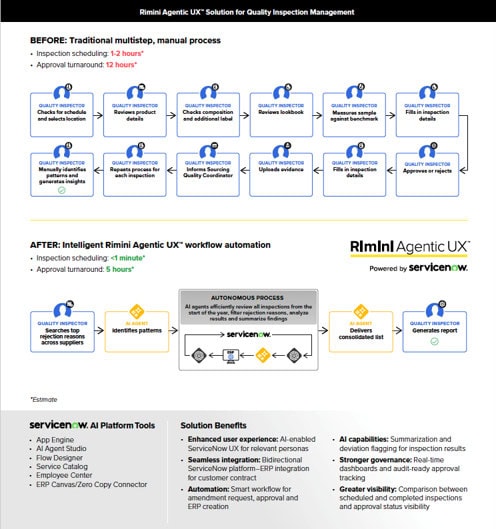
The POC tackled a quality inspection process that took 12-15 hours per cycle and involved heavy manual effort. In under 45 days, Rimini Street and ServiceNow delivered a solution combining two AI agents, a low-code interface and direct integration with existing data. The process now runs in five hours – a 67% reduction with mobile functionality that the team specifically needed.
Banhe noted that La Moda had previously attempted the same project internally, and six months in, it still wasn’t finished. As Teran emphasized, the Rimini Street team didn’t just automate the existing 12 steps. They simplified the process first, then applied AI where it created real value. The savings predicted in this single use case alone covered the annual ServiceNow license needed for full implementation.
Brazil’s tax reform: A critical local priority
A panel led by Eduardo Borba, GVP of Rimini Street Brazil’s Global Capabilities Center, with Jorge Campos, Founder of Brazil’s Public System of Digital Bookkeeping (SPED), examined one of the most consequential regulatory shifts in Brazilian business history.
Considered one of the most significant structural overhaul of the country’s fiscal system in decades, the change radically simplifies the consumption tax system by replacing five complex legacy taxes (PIS, COFINS, IPI, ICMS, and ISS) with a dual-VAT structure and a new Selective Tax (IS), accompanied by reforms to income tax and dividend distribution. The first deliverables landed in 2025, 2026 implementations are underway for 2027 go-live, and the transition continues through 2033.
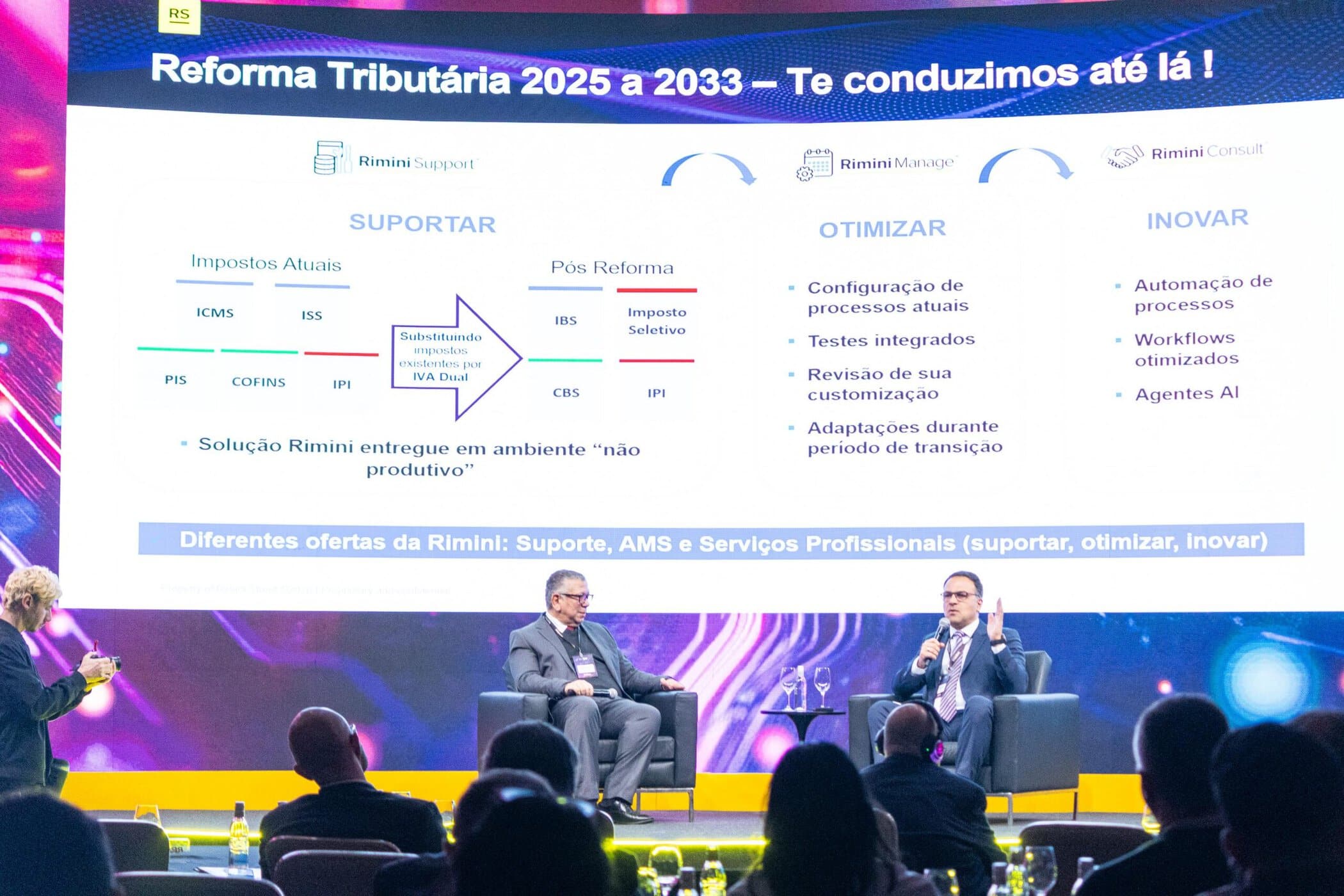
Campos’s pragmatic warnings, particularly around the new “assisted assessment” model for IBS and CBS, the unified assessment that consolidates thousands of branch filings, and the split payment mechanism that works for B2C e-commerce but raises hard cash-flow questions in B2B, gave Brazilian CFOs and CIOs in the room a concrete checklist of what to model now.
Borba also reminded the audience that Rimini Street runs monthly webinars for clients walking through each release, platform by platform, for both SAP and Oracle EBS to keep clients educated on what to expect.
Start with the process, not the technology
Street Smart Brazil made one point especially clear: Successful AI adoption does not begin with a large-scale migration or an isolated technology purchase. It begins with understanding the business process.
Organizations need to identify where work is slowing down, simplify the process and then apply automation or AI where it can deliver a measurable result. The experiences shared by Continental Parafusos, Eletronet and La Moda demonstrate that meaningful modernization can begin without replacing the systems at the center of the business.
Watch the highlight reel to feel the excitement at the Brazil event, or for a deeper dive, visit the Brazil event page and access individual session videos.
You can also read the Street Smart Houston recap for more practical perspectives on Agentic AI ERP.
What will you learn at the next Street Smart?
Each Street Smart event is a distinct experience built around exclusive keynotes, diverse client and peer perspectives and thought leadership designed to challenge assumptions and surface actionable insight.
These events fill up quickly! Register now to receive notifications as new dates are announced and be the first to reserve your seat. Traveling abroad or have colleagues you’d like to invite to a Street Smart in another region? Visit the Street Series page for the full calendar.