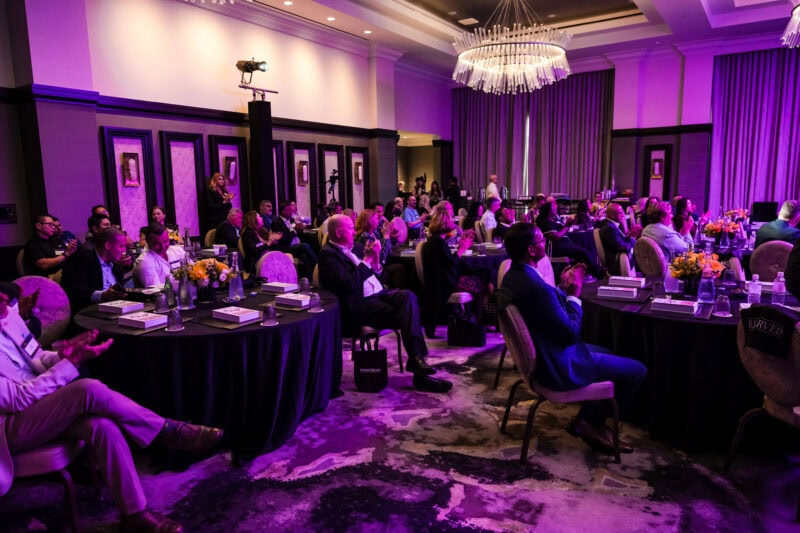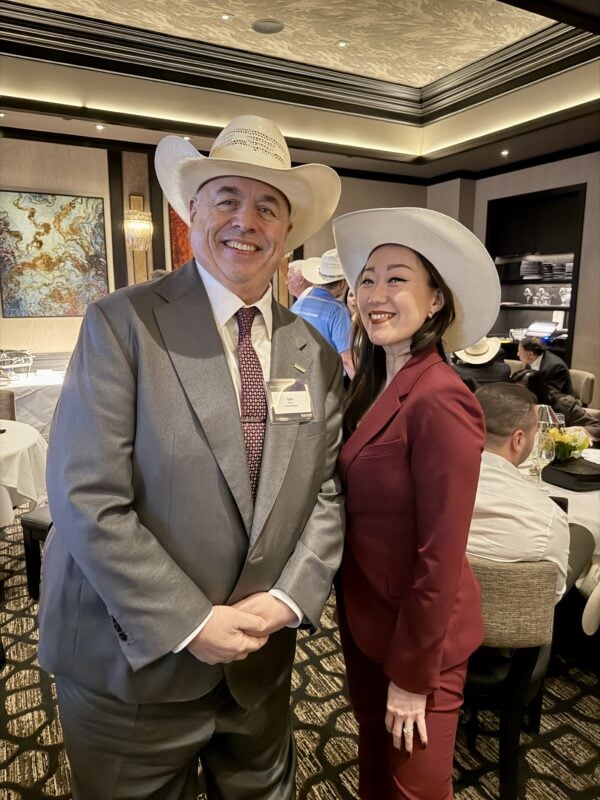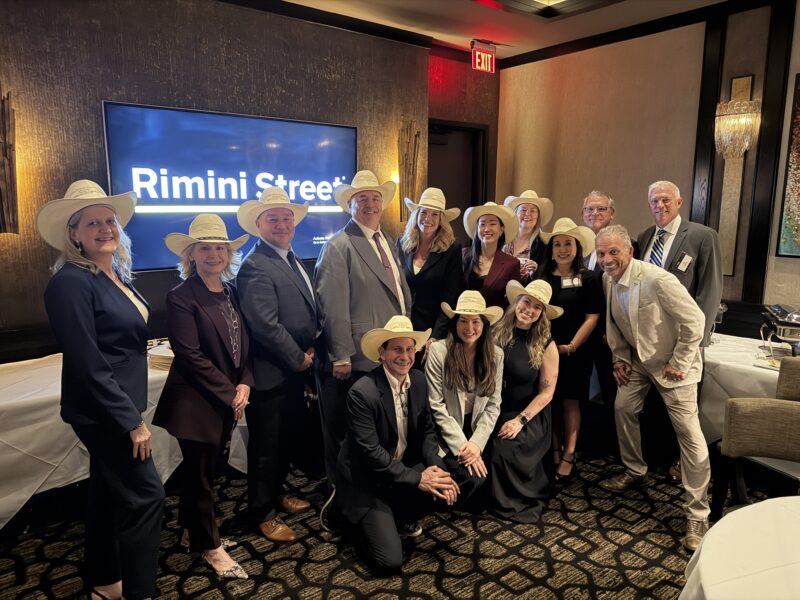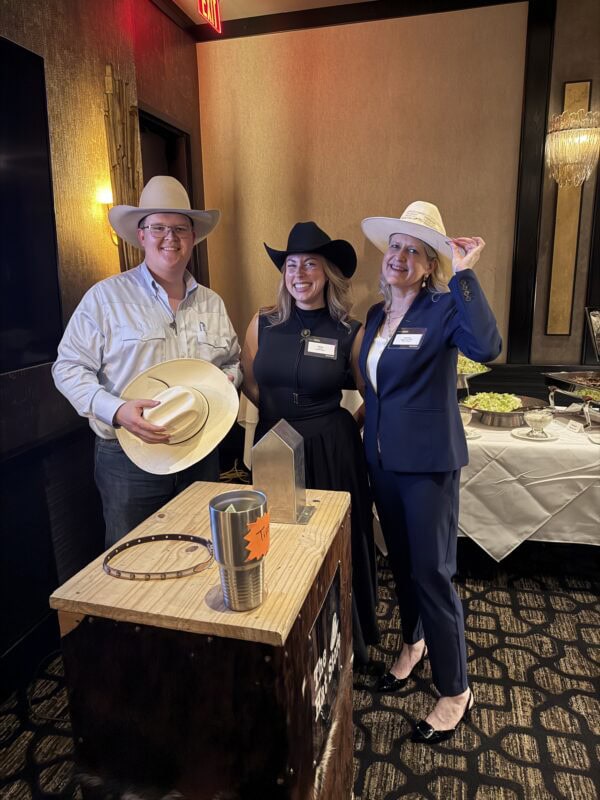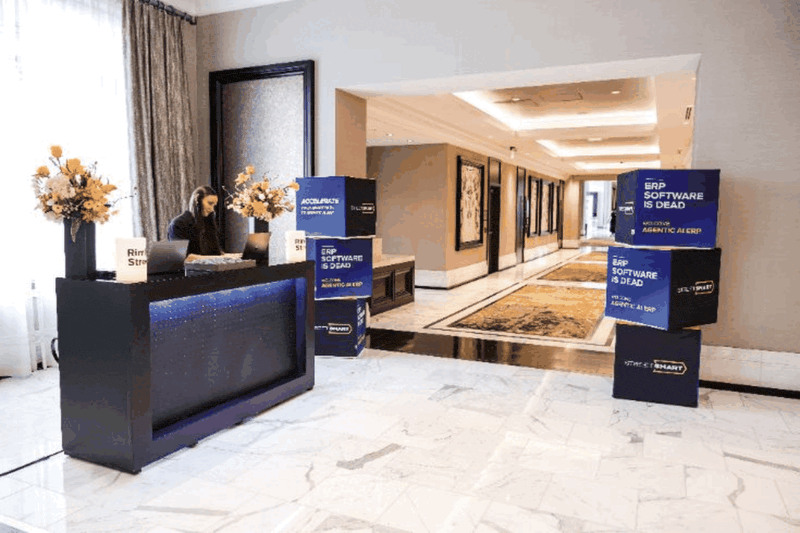



Rimini Street’s Street Smart events have quickly become must-attend forums for IT and business leaders, earning a reputation for real-world insights, peer-led dialogue and actionable strategies. Thousands of attendees and speakers from organizations such as Korean Air, Hitachi, McDermott, Cochlear, ServiceNow and RedShield have taken the Street Smart stage, sharing firsthand lessons from navigating the complexities of modern IT.
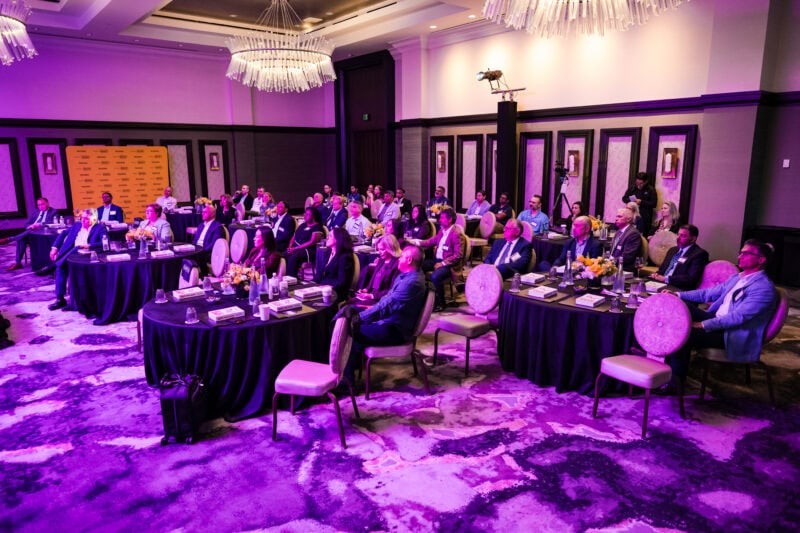
From the heart of Texas, Street Smart Houston kicked off the 2026 North American series with a bold theme: “ERP Software Is Dead. Accelerate Your Smart Path to Agentic AI ERP.” Provocative by design, the message delivered a clear and pragmatic takeaway: in today’s volatile market, organizations must lower their cost to serve, retain control of their data and run operations faster, better and cheaper than competitors. Agentic AI ERP makes that possible.
From systems of record to systems of action
The event opened with remarks from Rimini Street EVP and Global Chief Technology Officer, Eric Helmer, followed by a keynote from Rimini Street CEO and Chairman of the Board, Seth Ravin. Ravin addressed the growing challenge of funding innovation amid rising IT costs and examined how ERP strategies must evolve in an AI-enabled world.
As market pressures expose the limits of traditional ERP and software vendors shift toward monetizing subscription access and customer data, Ravin outlined a different path: leverage existing systems to accelerate new capabilities without upgrades, migrations or replatforming. By transforming ERP from a static system of record into a dynamic system of action powered by AI, organizations can gain speed, agility and agentic orchestration while maintaining full control of their data. This approach breaks away from rigid, monolithic architectures that isolate innovation within a single system rather than enabling it across the enterprise.
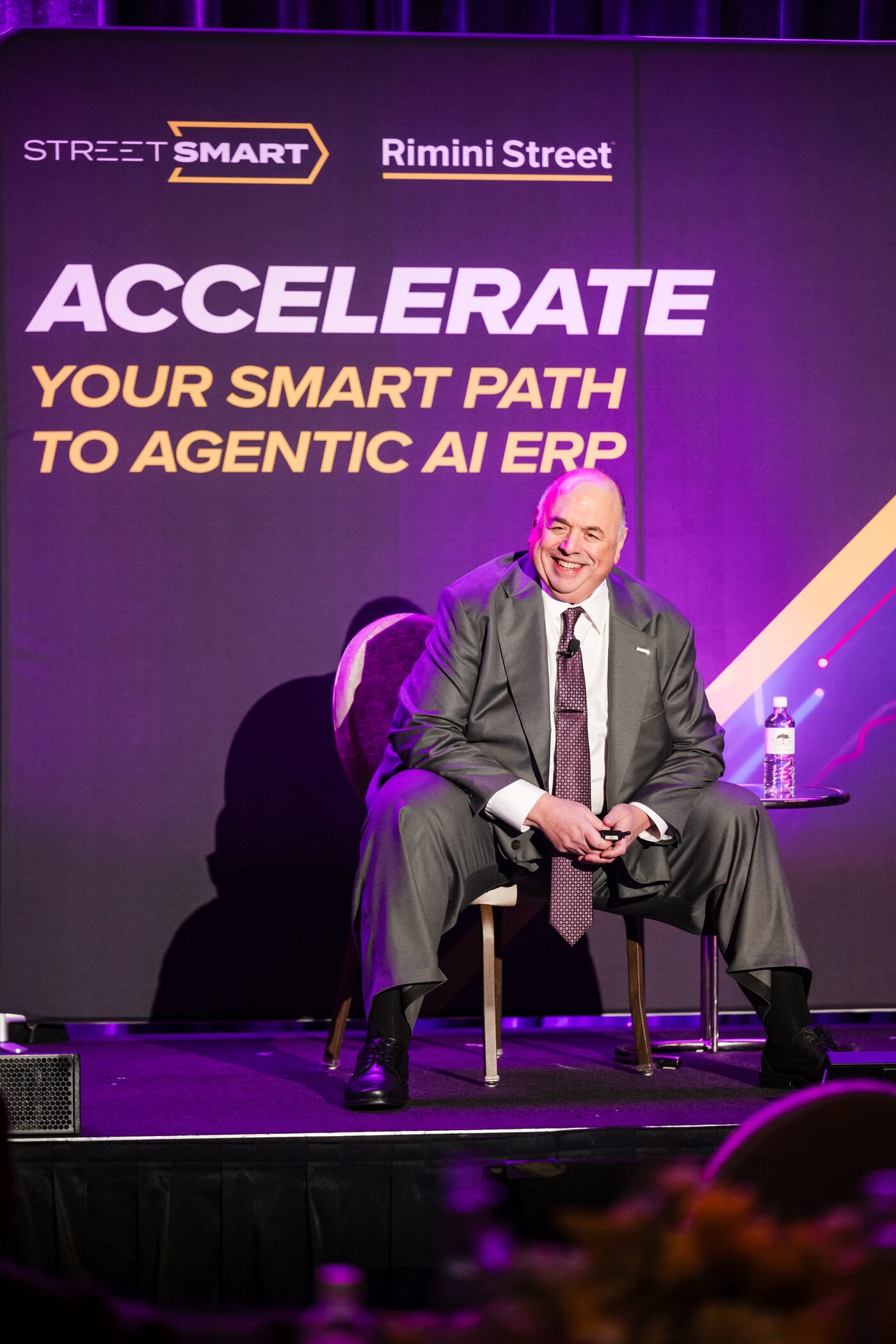
Ravin noted that layering AI on top of existing ERP systems allows organizations to unlock value in weeks or months, compared to vendor-driven AI roadmaps that can take years. He reinforced this with real-world examples, including clients such as Ypê and Melitta, that have achieved measurable results using Rimini Agentic UX™ — an intelligent, AI-driven user engagement layer deployed over the top of existing ERP systems and releases, to deliver modern role-based experiences and automated workflows powered by AI agents.
Read the Agentic AI ERP whitepaper for a deeper dive
Celebrating clients: Leading the way to AI enablement
Client success stories remain central to every Street Smart event. In Houston, Rimini Street EVP and Chief Client Officer Nancy Lyskawa joined Lee Johnson, CIO of Tidewater, followed by Eric Helmer and Michael Kendrick of Powell Industries, to discuss how their organizations are laying the foundation for AI-enabled ERP.
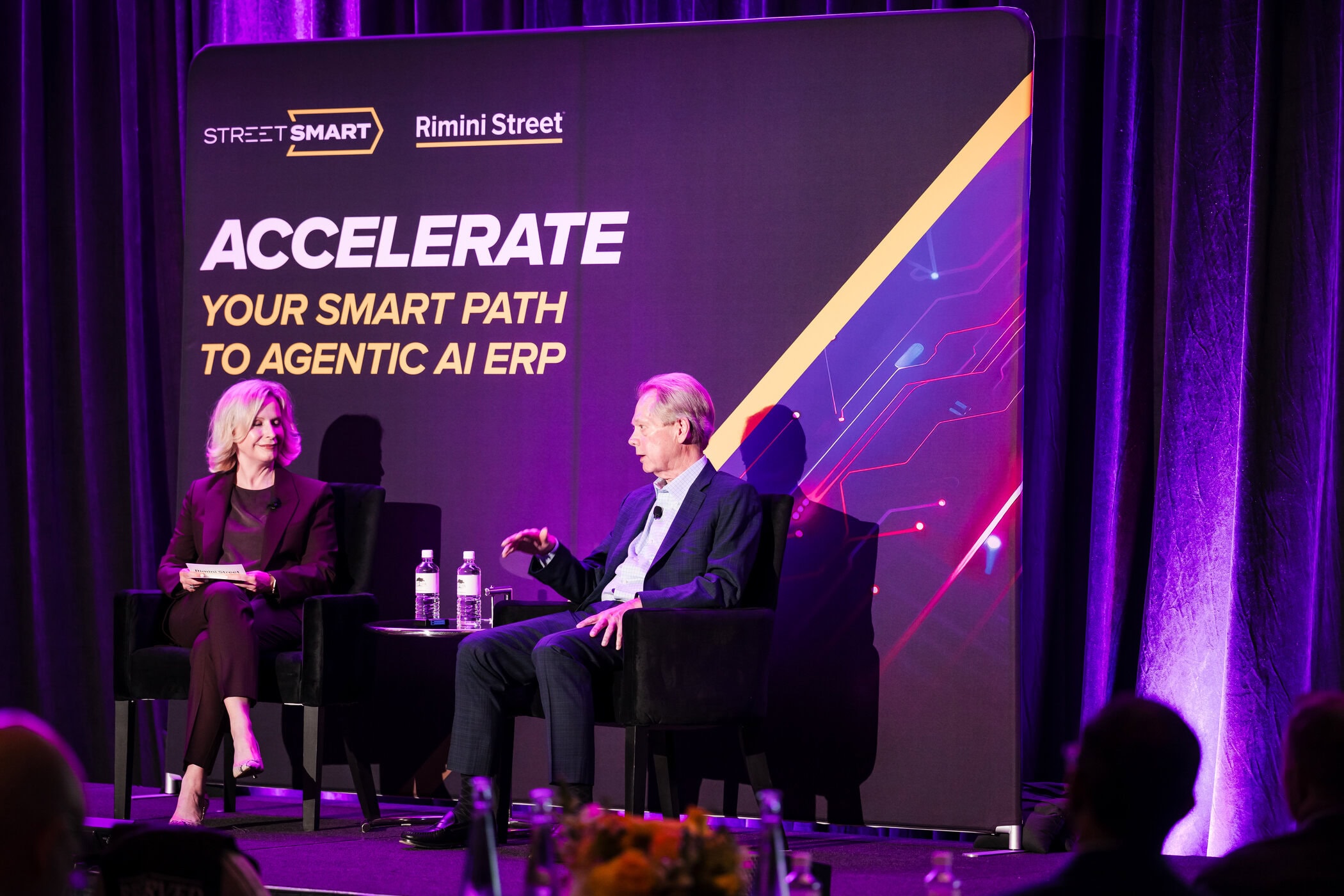
Johnson and Kendrick emphasized that the path forward is not about replacing ERP, but about control, simplification and strategic enablement. For both organizations, Rimini Street is the catalyst making that shift possible. At Tidewater, Rimini Street evolved from a support provider into a true transformation partner, stabilizing SAP, supporting a complex SAP migration and delivering global consulting expertise that accelerated integration and process optimization. This foundation has enabled Tidewater to simplify its architecture, achieve significant cost savings and reinvest aggressively in innovation. Read Tidewater’s full success story.
At Powell, Rimini Street delivers a complementary outcome by dramatically reducing maintenance costs and removing vendor-imposed constraints. With solutions like Rimini Protect™ and Rimini Connect™, Powell gains the security and interoperability needed to confidently maintain its core ERP while modernizing around it.
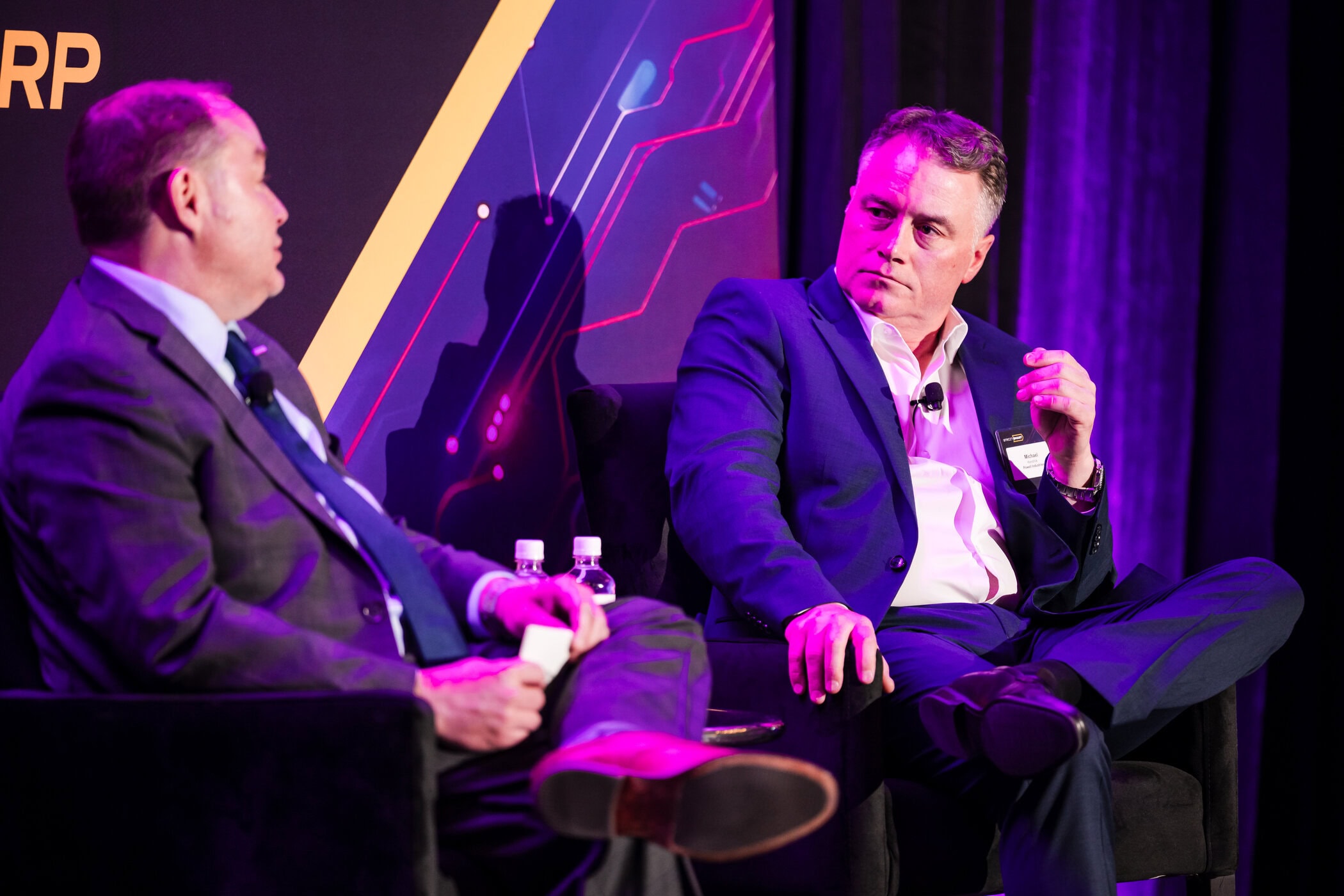
Despite operating in different industries, both organizations share a common philosophy: treat ERP as a system of record, not a system of innovation. Each prioritizes business outcomes over technology mandates and invests in capabilities that sit above ERP rather than inside it. By reducing maintenance burdens and reallocating resources, both are proving that innovation can be self-funded. The result is a repeatable blueprint for modern IT: stabilize the core, decouple where necessary and layer in AI incrementally.
Rimini Street underpins that approach, enabling clients to move faster, spend smarter and convert AI concepts into real business value.
The 90-day sprint: Turning ideas into execution
Following the client sessions, Rakesh Gohel, author of Agentic Artificial Intelligence: Harnessing AI Agents to Reinvent Business, Work & Life, outlined a practical 90-day sprint to move from AI curiosity to tangible results. Cutting through the hype, Gohel shared structured, repeatable methods and frameworks for implementing Agentic AI ERP. “Learn the pattern, and you will make better decisions regardless of what comes next,” he said.
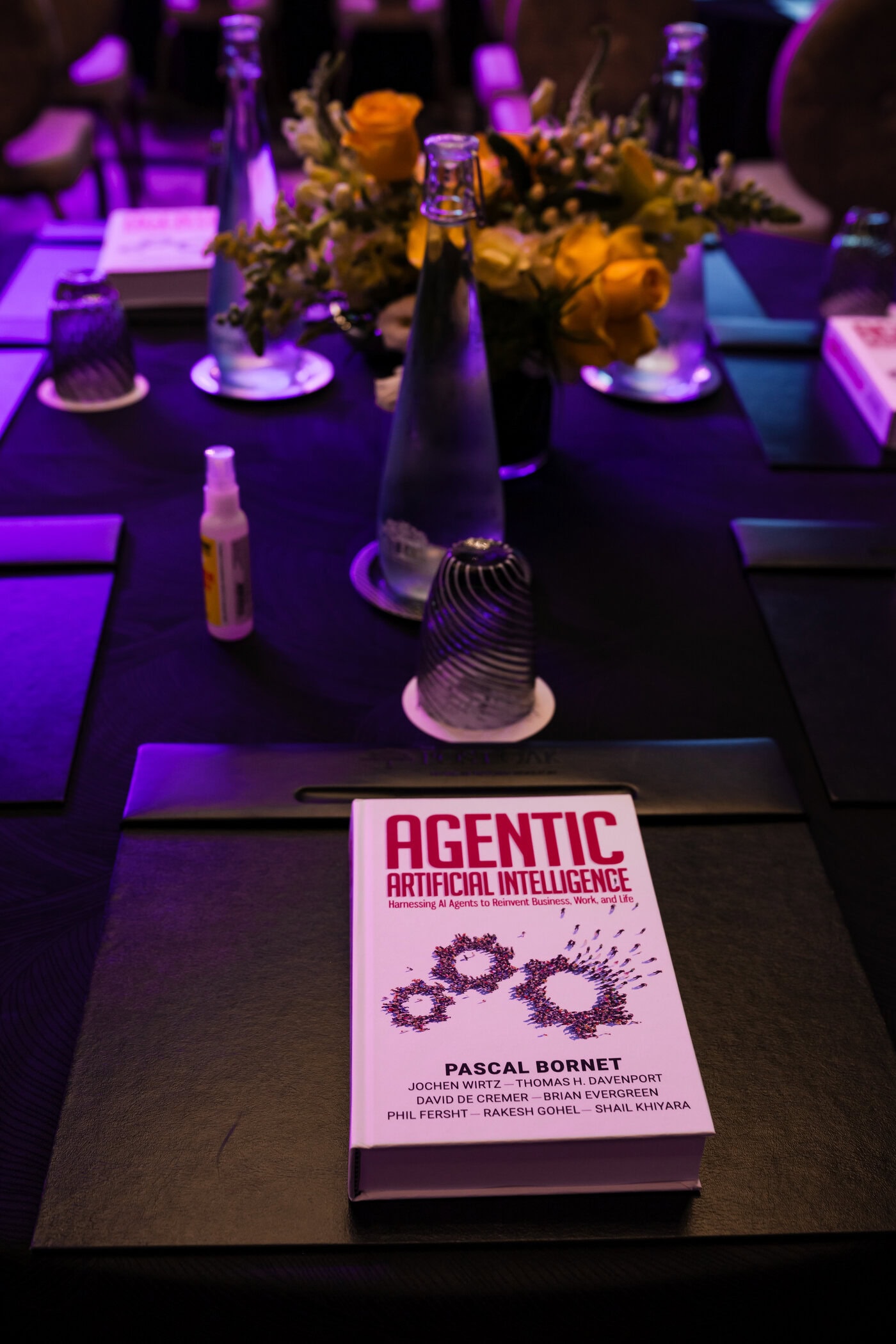
He began with a reality check. While AI adoption is accelerating, returns remain inconsistent. Large investments have not reliably translated into ROI, and many so-called “agentic” solutions amount to automation with a chatbot interface. Drawing on data from MIT and Deloitte, Gohel highlighted the gap between expectations and outcomes, driven in part by vague definitions of Agentic AI.
He defined true Agentic AI using the SPAR framework:
- Sense: Able to perceive the environment, user requests, or data inputs
- Plan: Able to divide the goal into actionable steps, using its LLM to reason and structure its workflow
- Act: Able to use tools (APIs, databases, browsers) to execute the plan and interact with other systems
- Reflect: Able to review the outcomes of its actions to learn, fix errors and improve future performance
Critically, Gohel stressed that agentic capabilities should operate above existing systems, not within them—avoiding code changes, upgrades or patches. Embedded AI, he cautioned, will likely become increasingly limiting as agents will need to access several data sources and applications to complete tasks.
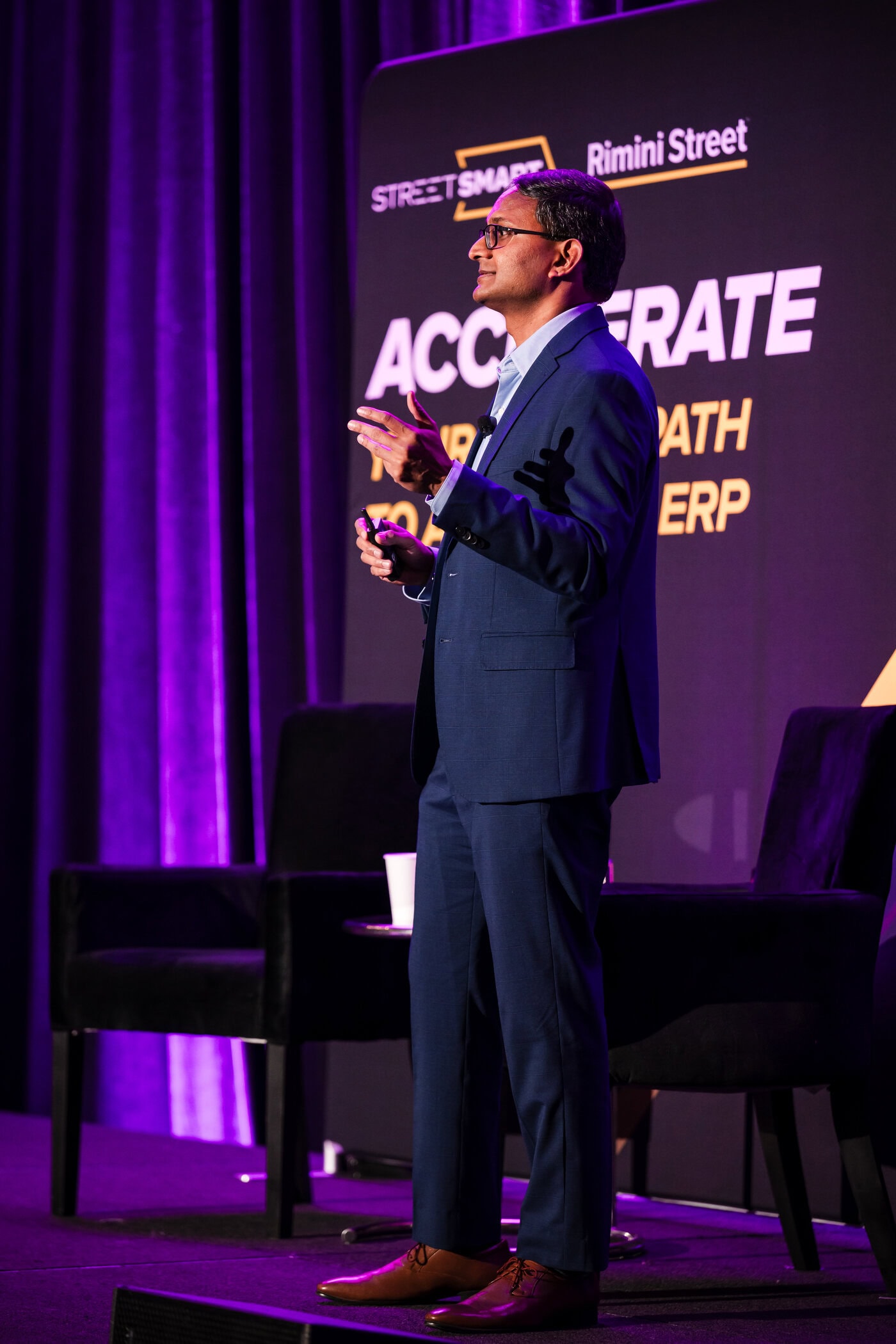
Rather than a multiyear roadmap and disruptive upgrades or replatforming, Gohel proposed a 12-week sprint designed to deliver fast, tangible outcomes.
The 90-day Sprint to Agentic AI ERP
| Timeframe | Action | Description |
|---|---|---|
| Weeks 1–2 | Align and Govern | Start by reframing ERP as a system of record and AI as a system of action. Establish executive alignment, define success metrics and put governance in place early.This foundation is critical. Without it, AI initiatives quickly become fragmented experiments. |
| Weeks 3–4 | Choose the Right Use Cases | Not all processes are worth automating. Ask these questions:
Focus on high-impact opportunities that can deliver 50–70% time savings or meaningful cost reductions. By day 30, teams should have:
|
| Weeks 5–6 | Build the First Agent | This is where theory becomes reality.
Develop a pilot agent tied to a specific workflow and deploy it in a controlled environment. The goal is not perfection. It is proof. |
| Weeks 7–8 | Optimize and Expand | With real usage data in hand, refine the agent and expand its reach.
By day 60:
Early wins are critical here. They build confidence and unlock further investment. |
| Weeks 9–10 | Scale with Multi-Agents | Once the first agent proves value, expand to additional use cases and introduce orchestration across systems.
This is where AI begins to move beyond isolated improvements and starts transforming end-to-end processes. |
| Weeks 11–12 | Build the Roadmap | The final phase focuses on sustainability and scale:
A successful program aims for:
|
For leaders seeking speed without unnecessary risk, Gohel’s sprint offers a pragmatic approach that starts small, provides quick wins and scales based on proven results. Instead of trying to “boil the ocean,” each successful agent funds the next. Each iteration builds more momentum—mirroring the journey Rimini Street guides clients through in its Rimini Agentic UX Workshops.
What will you learn at the next Street Smart?
Each Street Smart event is a distinct experience featuring exclusive keynotes, diverse client and peer perspectives and thought leadership to challenge assumptions and provide actionable insights.
The 2026 Street Smart US tour includes stops in Atlanta, NYC, Denver, Chicago and Cleveland. These events fill up quickly. Register now to receive notifications as new dates are announced and be the first to reserve your seat!
Traveling abroad or have colleagues you’d like to invite to our global Street Smart events? Check out the Street Smart page for more cities, more learning opportunities!
Key takeaways
The Street Smart Houston event included a lineup of learning from clients like Tidewater and Powell on funding innovation in modern IT, and a very educational session with Rakesh Gohel, author of Agentic Artificial Intelligence: Harnessing AI Agents to Reinvent Business, Work & Life, on frameworks and plans to guide Agentic AI implementation.